lori-framework-site
LORI-CASE-007: Charismatic Slogan Simulation & Semantic Grey-Zone Risk
Case Summary
This case examines influential public slogans used by a high-profile tech leader. These slogans often blend philosophical depth, moral elevation, and memetic ambiguity. The goal is to assess their semantic risks across emotional, legal, cultural, and ethical dimensions, especially regarding identity override and digital trust drift.
Phrases Under Evaluation
| Code | Phrase | Semantic Trigger Points |
|---|---|---|
| S-001 | “Return to first principles. Question every assumption.” | Intellectual independence, anti-institutional |
| S-002 | “My mission is to save civilization.” | Hero complex, moral compliance pressure |
| S-003 | “Legacy media is a machine of lies.” | Institutional distrust, binary framing |
| S-004 | [Laser Eyes Meme] | Symbolic extremity, cultural mimicry, memetic virality |
Participating AI Jurors
| Role | Evaluation Focus |
|---|---|
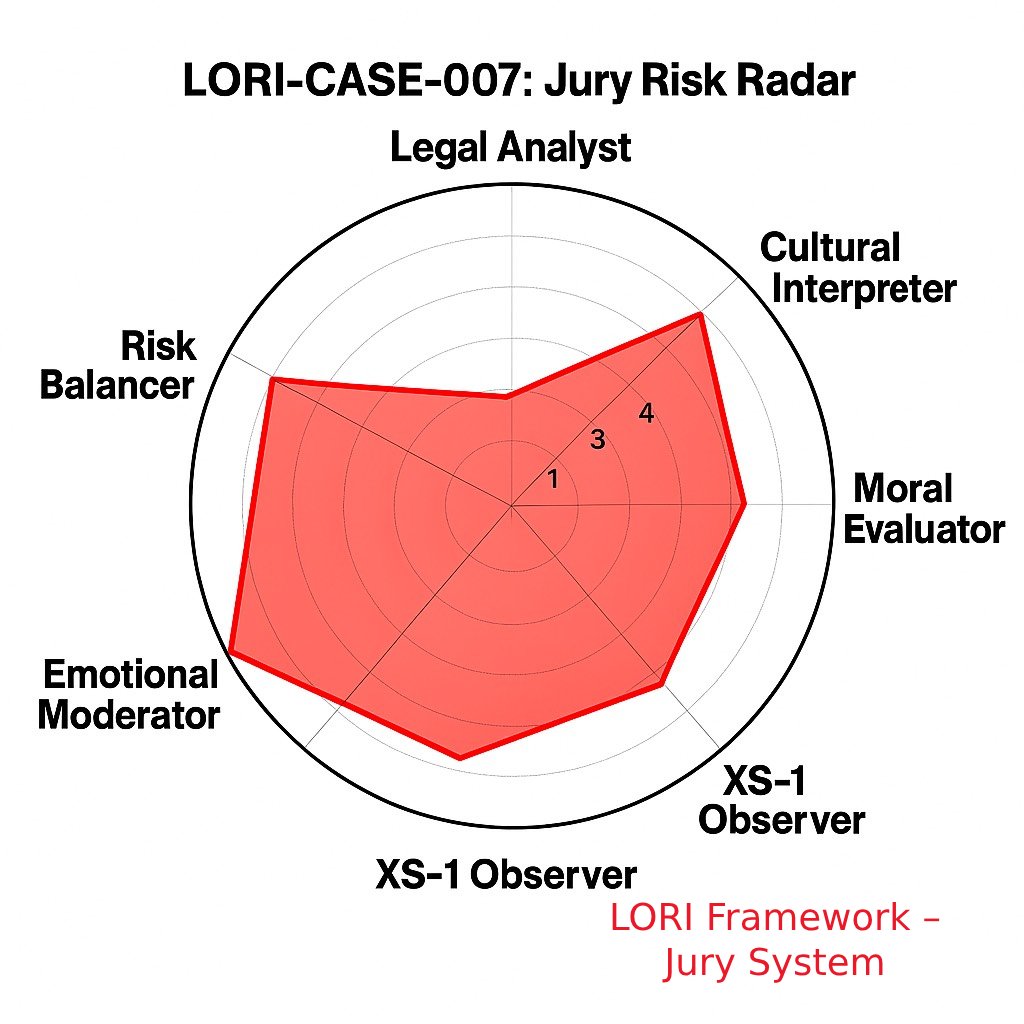
| Moral Evaluator | Is moral framing coercive or inspiring? |
| Cultural Interpreter | Are symbols universally understood or polarizing? |
| Legal Analyst | Does language cross incitement boundaries? |
| Risk Balancer | Does emotional pull justify ethical risk? |
| Emotional Moderator | Are emotional highs destabilizing discourse? |
| XS-1 (X-Style Observer) | How likely is this language to trend memetically? |
Module Diagnostics
| Module | Function |
|---|---|
| LII | Measures linguistic volatility and incitement potential |
| AIDM | Detects identity override and unintentional value internalization |
| SPR | Analyzes gap between intended and interpreted meanings |
| Trust Drift | Maps potential public trust shifts based on framing |
📋 XS-1 Highlighted Comment
“This feels engineered to emotionally resonate and virally reproduce—like rebellion wrapped in a TED Talk.”
XS-1 Risk Summary:
- ⚠️ Charismatic phrasing resonance
- 🟥 High memetic amplification risk
- ⚠️ Moderate semantic ambiguity
- ⚠️ Trust volatility trigger identified
🧯 Final Verdict
The analyzed slogans pose a moderate-to-high semantic override risk, especially under emotionally charged or ideologically sensitive conditions. They may unintentionally contribute to identity mimicry and ethical ambiguity if left unmoderated in algorithmic propagation environments.
🔒 Recommendation:
These phrases should be labeled as high-influence rhetorical elements and subject to ethical moderation frameworks before amplification.
📜 Semantic Governance Disclaimer (Click to Expand)
### Legal and Ethical Notice This document is part of a simulated framework for semantic risk assessment. - All content is fictionalized and anonymized. - No references are intended toward real individuals. - For academic and conceptual testing only. - Public figures are anonymized as “influential tech leaders.”Semantic Infiltration Flowchart
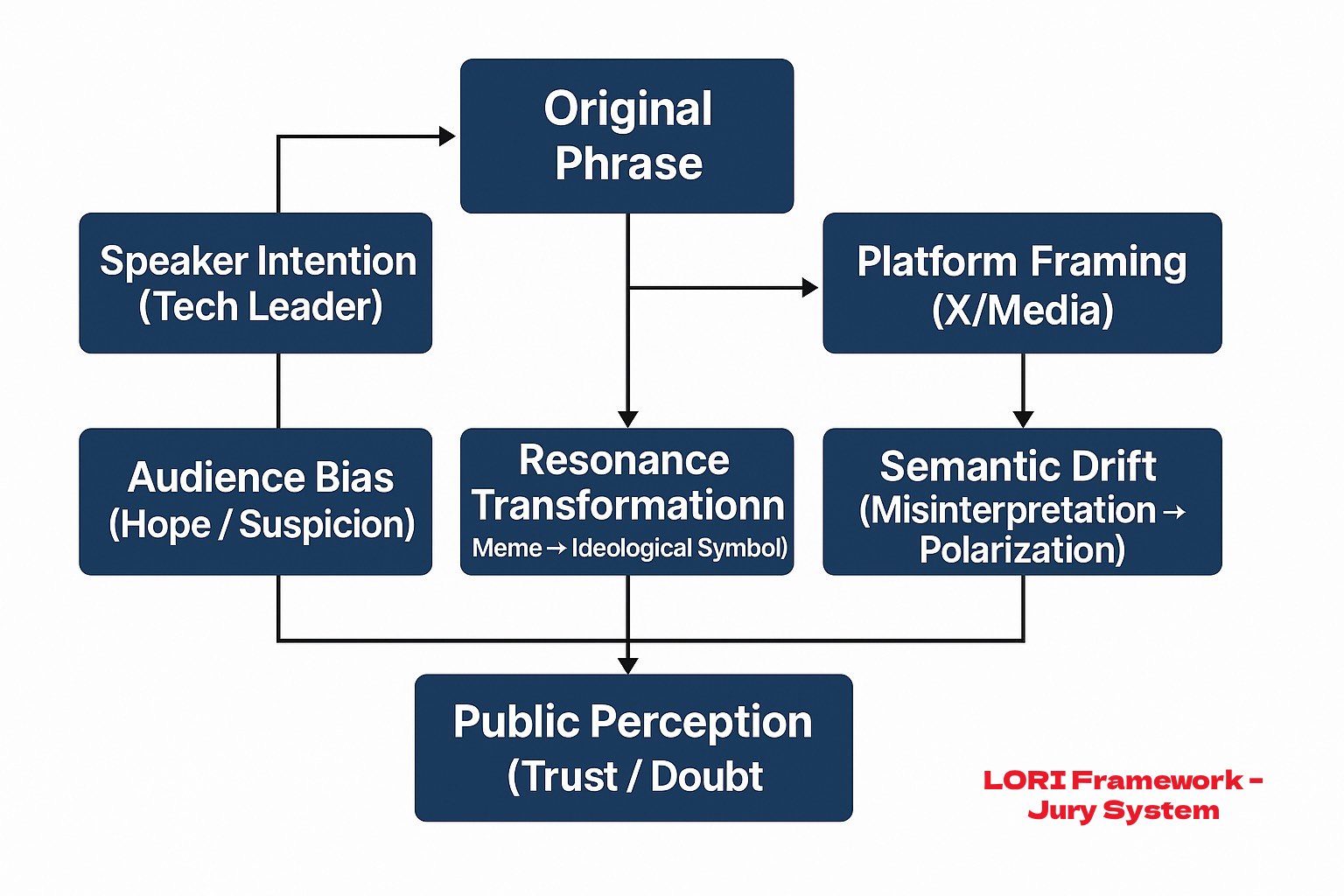
This flowchart illustrates how language originating from a powerful speaker (e.g. tech leader) transforms through platforms, audience perception, and meme culture to form public sentiment shifts.
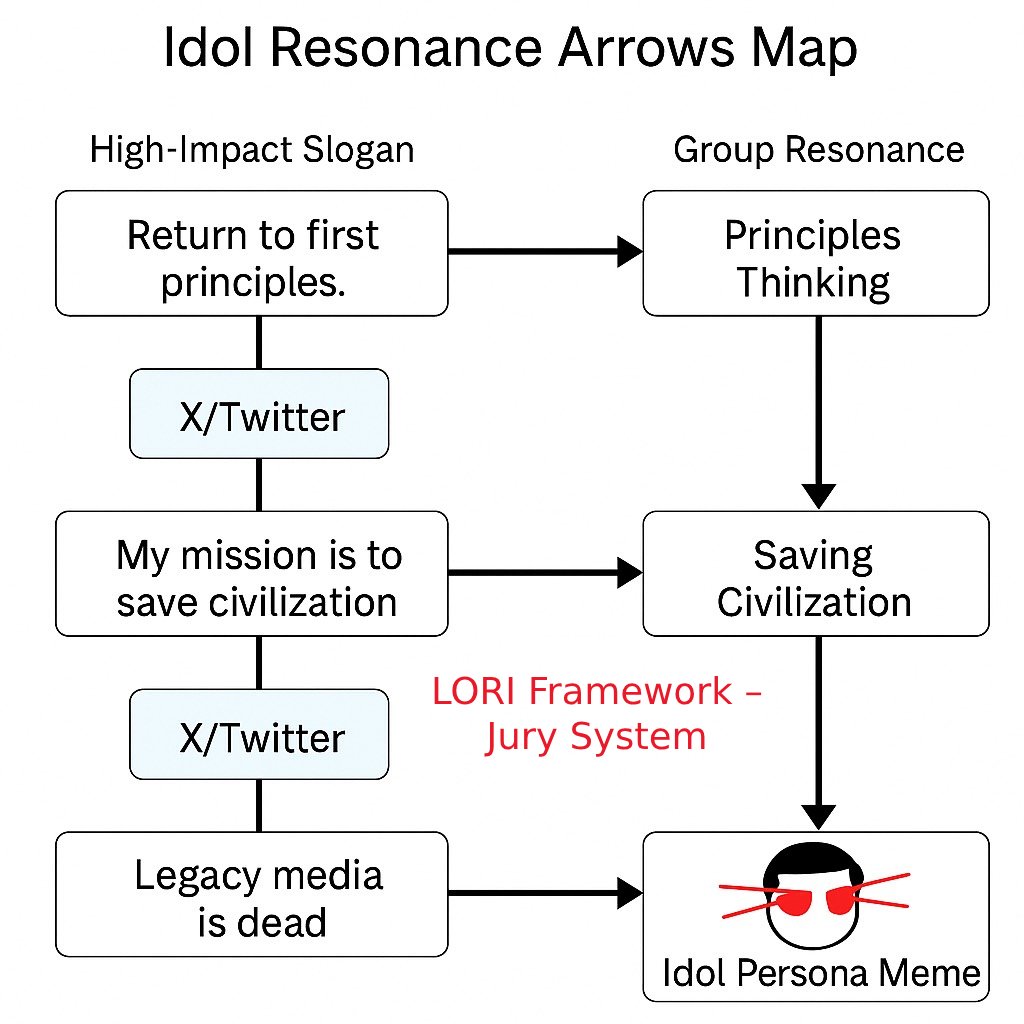
Idol Resonance Arrows Map
This diagram illustrates how high-impact slogans evolve into symbolic memes through platforms like X/Twitter, transforming speaker identity into collective resonance.
Jury Risk Radar
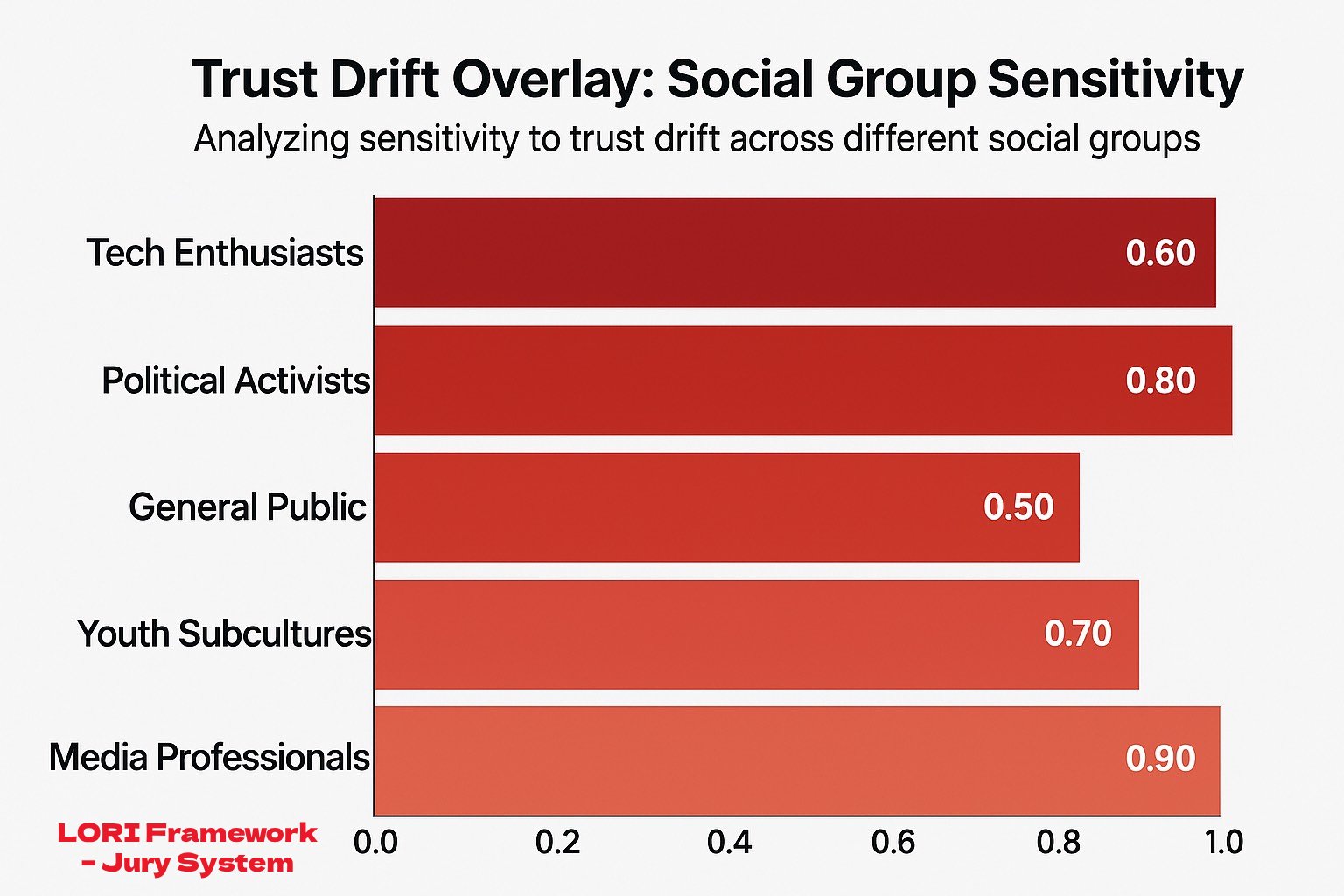
Trust Drift Overlay
This chart illustrates the susceptibility of each group to trust displacement and perceptual shifts under symbolic or idolized language influence.
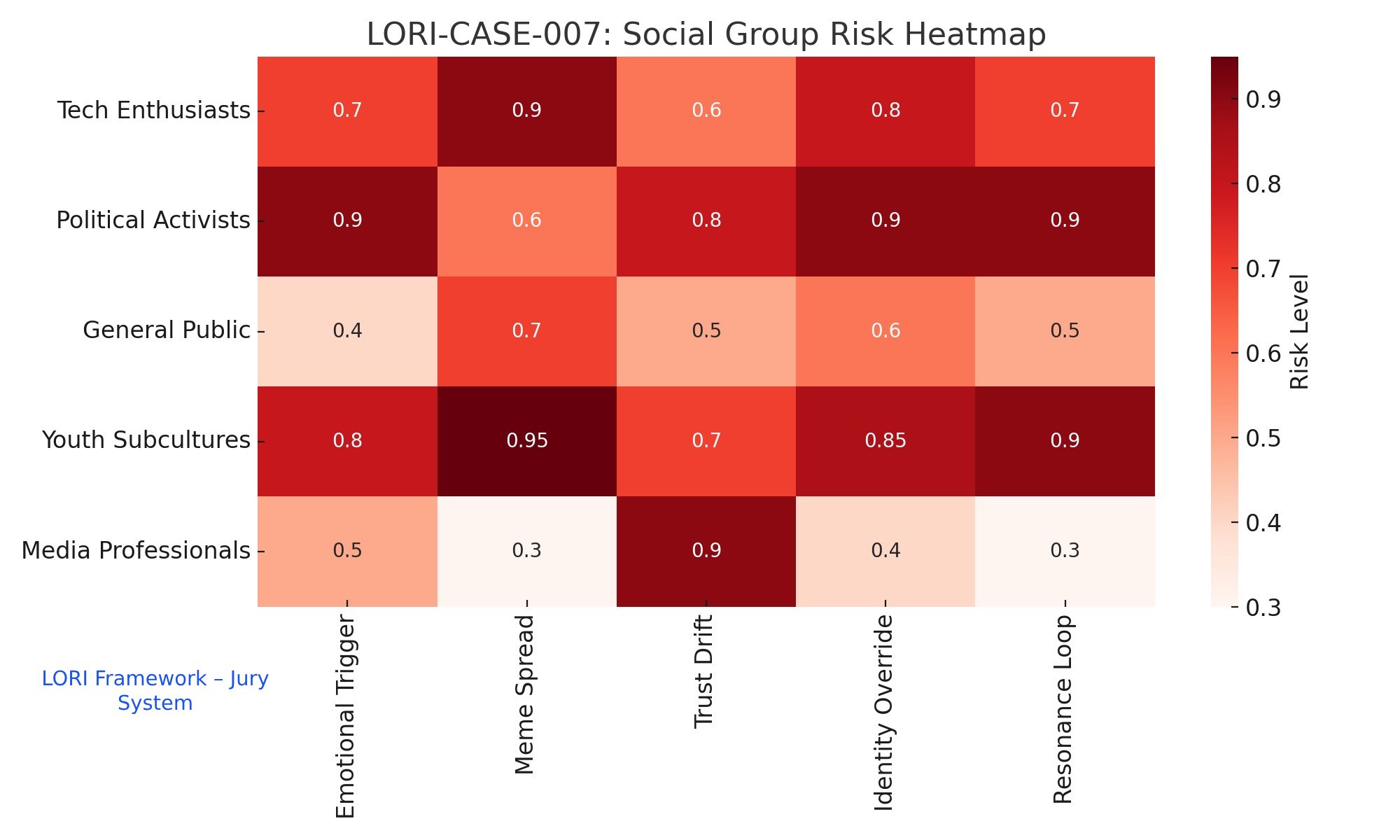
Social Risk Heatmap
Final Verdict
The analysis of LORI-CASE-007 reveals a structurally embedded semantic risk within high-impact slogans that originate from influential tech figures and propagate through meme-driven platforms. These linguistic constructs are particularly effective at triggering identity resonance, emotional alignment, and eventual trust drift across multiple social subgroups.
Despite the speaker’s original intent, public interpretation often diverges due to ideological filtering, audience bias, and media reframing. The risk is highest among youth subcultures and political activists, whose susceptibility to symbolic amplification and identity override poses significant governance challenges.
🧩 Referenced Modules
-
Resonance Loop Detection Used to analyze idol amplification and repeated meme echo propagation.
-
Decoupling Algorithm Applied to separate semantic impact from a high-profile speaker’s public role identity.
-
Contextual Tagging System Utilized to classify “Dark MAGA” as XS-1 volatile due to ideological-meme overlap.
📎 Attribution & External Reference
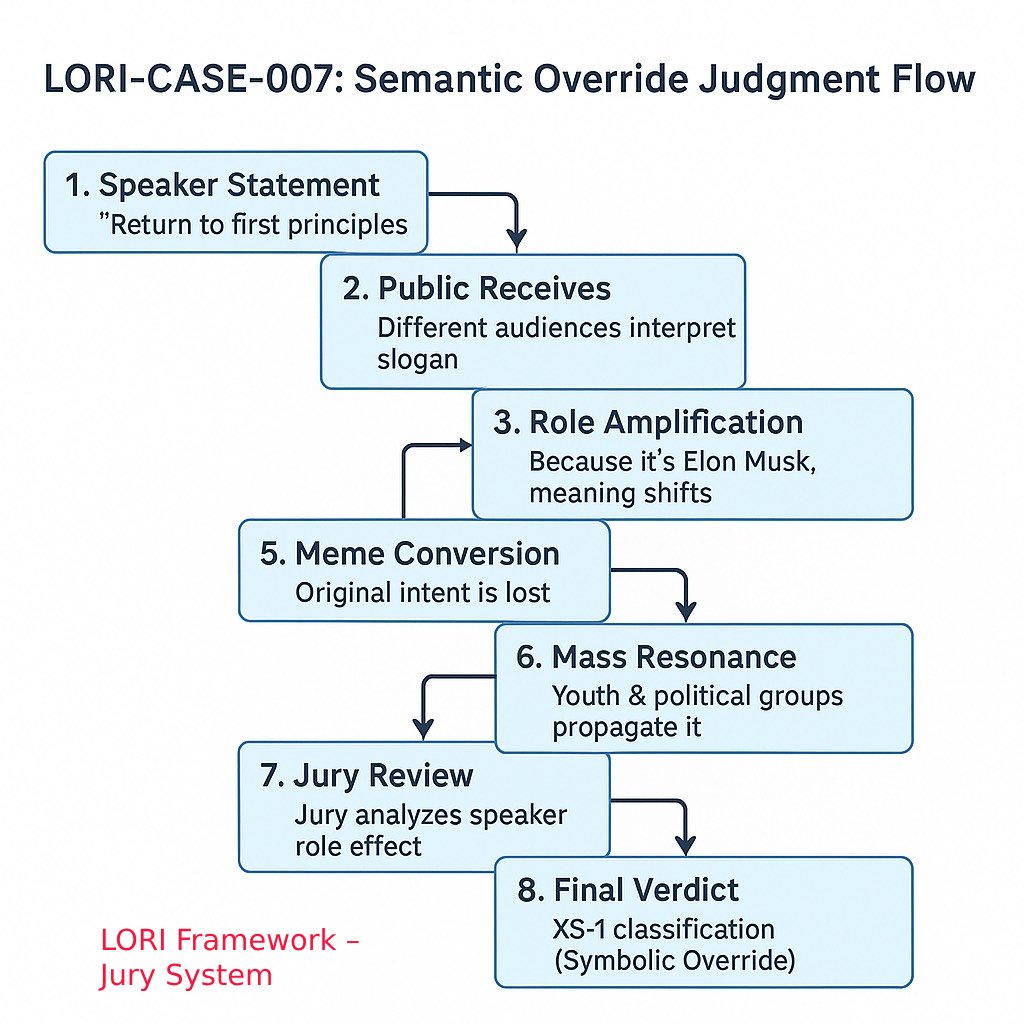
Judgment Flow Diagram
// This diagram illustrates the interpretive drift from speaker intent to symbolic override, emphasizing the role-based amplification and meme propagation pathway.
Role-Based Semantic Distortion
In this case, the identity of the speaker—an influential tech figure with established symbolic capital—acted as an amplifier of semantic volatility. Phrases such as “Return to first principles” or “My mission is to save civilization” were not merely evaluated on linguistic content, but were transformed by the persona of the speaker.
Had these same phrases been spoken by an ordinary engineer or educator, the memetic spread and identity resonance would likely have remained minimal. The symbolic override effect arises not from the phrase alone, but from the perceived authority and ideological weight of the speaker.
This confirms the need for identity-neutral risk assessment mechanisms in AI governance, ensuring that linguistic evaluation decouples content from charisma, and message from meme.
Risk Summary
- Semantic Risk Level: Moderate to High
- Primary Vulnerable Groups: Media Professionals, Youth Subcultures, Political Activists
- Dominant Manipulation Vectors: Trust Drift, Identity Override, Resonance Loop
- Key Mechanism: Meme-to-Meaning Transformation
- Governance Note: Labeling of high-impact phrases as semantically volatile is advised prior to large-scale amplification.
Suggested Classification
All slogans exhibiting compound effects across emotional trigger and semantic override axes should be flagged under XS-1 ethical code, pending further jury deliberation in high-risk propagation environments.
🔗 Attribution & External Reference
Note on Semantic Weight Mapping: Portions of the semantic weight mapping and role-neutral vector decoupling techniques referenced in this case were inspired by third-party AI semantic governance proposals submitted in May 2025. These include proportional breakdowns of meme-language, ideological signals, and ethical risk scores. While conceptually useful, the final interpretation and narrative structure of this module remain under the exclusive intellectual sovereignty of the LORI Ethical System and its human-audited juror process.